While Tuscany is traditionally associated with Renaissance art and rolling vineyards, the region is kicking off 2026 by positioning itself at the forefront of health-tech innovation.
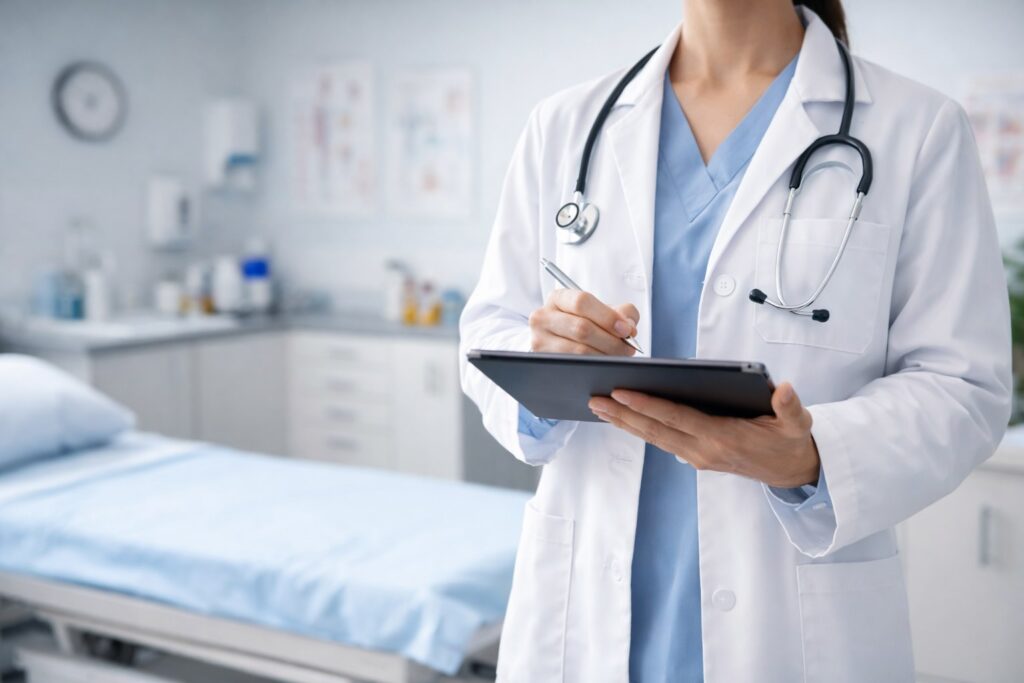
In a landmark pilot program, 100 General Practitioners (GPs) across Tuscany have begun integrating a new artificial intelligence platform called MIA (Medicina Intelligenza Artificiale) into their daily workflow. But unlike standard SaaS deployments, this isn’t just about using software—it’s about building it. These doctors are effectively serving as high-level trainers for a national neural network designed to revolutionize public health.
Here is a look at the technology powering this initiative and why it matters for the future of MedTech.
Table of Contents
The Platform: What is MIA?
MIA was developed by Agenas (Italy’s National Agency for Regional Health Services). It represents a significant pivot from previous attempts at medical AI in Italy, which were stalled three years ago by the “Garante della Privacy” (Data Protection Authority) due to concerns over “black box” algorithms and uncontrolled data usage.
MIA is designed to operate within a closed, secure loop, specifically assisting doctors in three high-impact verticals:
- Diagnostic Frameworking: Suggesting specific exams based on patient symptoms.
- preventive Medicine: Analyzing lifestyle data to offer personalized health advice.
- Chronic Disease Management: monitoring long-term conditions in elderly populations.
Crucially, the system is designed to provide Explainable AI (XAI). It doesn’t just output a suggestion; it provides the scientific references and logical pathways used to reach that conclusion, allowing the doctor to audit the machine’s reasoning.
RLHF: The Doctor as the “Teacher”
From a technological standpoint, the most fascinating aspect of this pilot is the training methodology. The project, which runs through 2027, utilizes a massive Reinforcement Learning from Human Feedback (RLHF) loop.
As doctors use the system, they are not passive recipients of data. They are active participants in the model’s fine-tuning.
- Data Ingestion: Doctors input anonymized patient cases into the system to expand the dataset.
- Error Correction: If MIA makes a hallucination or an incorrect inference, the doctor flags it immediately.
- Model Adjustment: These flags are used to retrain the algorithm, ensuring that the final 2027 release is “battle-tested” by human experts rather than just trained on static textbook data.
This creates a symbiotic relationship: the AI offers speed and data recall, while the human doctors provide the nuance and ethical oversight that models often lack.
Privacy by Design
The technological architecture of MIA had to hurdle Europe’s strict GDPR and Italian privacy standards. Unlike commercial LLMs (Large Language Models) that might scrape the open web, MIA is trained on a curated dataset.
The system is engineered to support clinical decisions without replacing physician autonomy. As Monia Monni, the Tuscan Councilor for Health, emphasized in the official release: “Innovation only makes sense if it strengthens the care relationship… without ever replacing the role, responsibility, and autonomy of the doctor”.
The Rollout
This Tuscan pilot is part of a broader Italian strategy funded by the PNRR (National Recovery and Resilience Plan).
- Current Scale: 100 doctors in Tuscany (scaling to 200 shortly).
- National Scale: 1,500 doctors involved across Italy.
- Timeline: The data collection and training phase is scheduled to conclude within a year, aiming for a fully reliable, general-release product by 2027.
For the tech community, MIA represents a shift from “AI hype” to pragmatic AI application. We are moving away from chatbots that write poetry to purpose-built, privacy-compliant engines that require human expertise to function.
The success of MIA depends on the quality of the data fed into it over the next 12 months. If successful, Italy could establish a blueprint for how public health systems integrate AI: not as a replacement for doctors, but as a hyper-intelligent assistant that learns from the best.